The main things to know
- Timber should be dried for the way and place it will be used.
- Kiln drying controls the drying process; it does not stop all future movement.
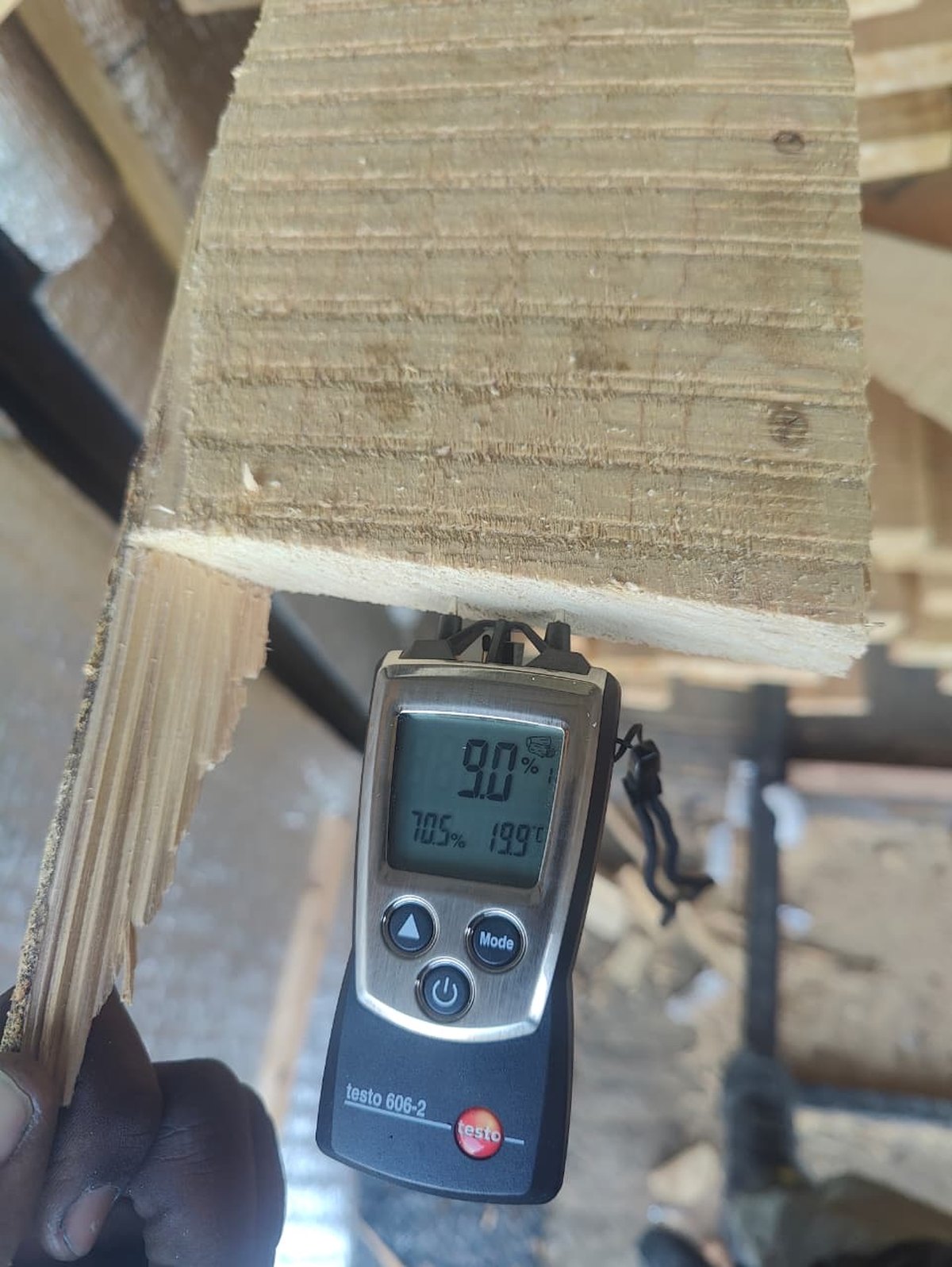
- Ask for moisture checks, not just a claim that the wood is dry.
- Good construction, storage and installation matter too.
Wood holds moisture, even when it feels dry
Freshly cut timber contains water. As it dries, its size and shape can change. A board may feel dry on the outside while still holding more moisture inside.
A moisture meter helps check it. The reading needs to be interpreted for the species and the way the meter is used; touching the board is not an equivalent check.
Dry enough for what?
A bedroom wardrobe and a covered outdoor table will not face the same conditions. Ask the workshop what moisture level is suitable for the timber’s destination and how it will be checked.
The aim is to prepare the wood for the conditions it is likely to experience. There is no single moisture figure that guarantees every timber product will work in every Kenyan home.
Why boards need room to move
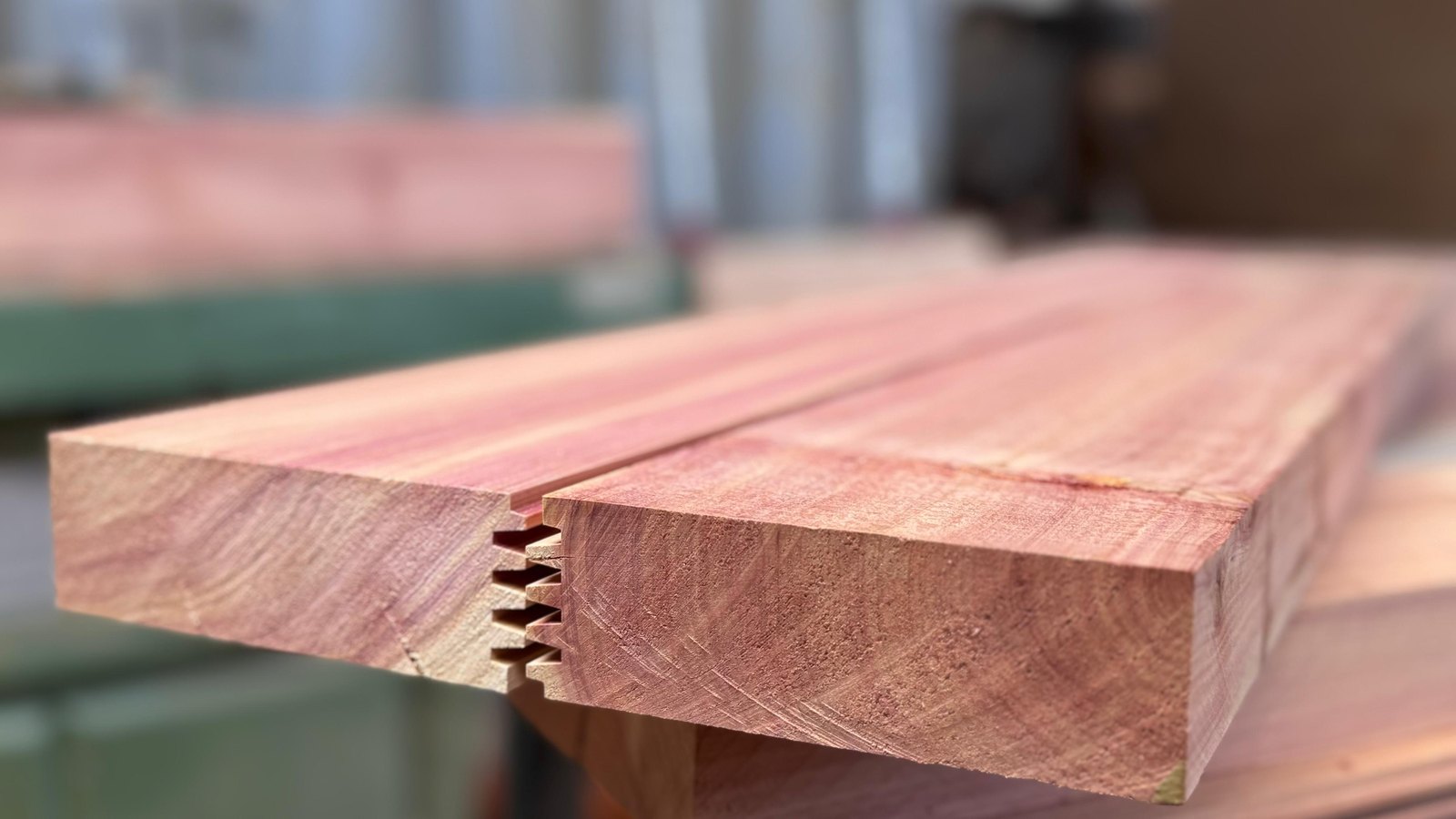
Wood can take in and release moisture after it becomes a door, floor or piece of furniture. Good joinery allows for that movement rather than trying to prevent it entirely.
For example, a wide tabletop needs suitable joints and fixings. A floor needs the installation details specified for the product. Drying and good making work together.
Problems you might notice later
- A door that rubs against its frame.
- Gaps appearing between boards.
- A tabletop cupping or twisting.
- Joints opening as parts move differently.
These symptoms can have more than one cause. If a product changes after installation, check moisture, workmanship and the surrounding conditions rather than assuming the finish alone is responsible.
What does a kiln do?
A kiln uses controlled conditions to dry timber. Air drying relies on suitable stacking, airflow and the surrounding weather. The right process depends on the timber and its intended use.
TimberStone has its own kiln and joinery workshop. When discussing an order, ask about the wood, its drying and the checks before it is made into your product.
The process matters more than the label
“Kiln dried” is useful information, but it does not tell you everything about the finished board. The drying needs to suit the species and thickness, and the timber still needs to be checked afterwards.
Poorly controlled drying can leave defects. Ask the maker how boards are selected and checked before they become doors, worktops or furniture.
Is drying the same as timber treatment?
No. Do not treat a drying claim as a promise of lasting protection from insects or decay. Ask what protection is needed for the timber species and where it will be used.
If treatment is included in the order, ask for it to be described separately. That makes it clear what you are buying and how the product should be maintained.
What to ask before accepting an order
- Which timber species is being used?
- How was it dried, and how was the moisture checked?
- Is it suitable for an indoor or outdoor location?
- What treatment and finish are included?
- How should it be stored before installation?
- Who should I contact if it changes after fitting?
If your house is still wet from plastering or floor work, discuss delivery and installation timing. Dry timber can pick up moisture again while it waits on site.
Choose the wood for the job
Different woods vary in appearance, durability and how they behave. Bring the look you like, but also explain how the product will be used. A dining table used every day has different demands from a decorative shelf.
Ask to see a sample with the proposed finish. Confirm the species and construction in the quotation so you can compare offers fairly.
What are you paying for?
A useful quotation describes the wood, sizes, construction, drying, treatment, finish and installation where included. That is more informative than comparing two prices for “a solid wood door”.
Bring your design or inspiration and tell us where the piece will go. We can discuss how to make it for your home and how to look after it.
Further reading
Questions we get asked
- What moisture content should the timber have?
- It should suit the species, product and conditions where it will be used. Ask the maker to explain and check the target for your order.
- Is air-dried timber good enough for doors?
- It may be, if its condition suits the intended use and it is properly checked. The drying method alone does not settle the question.
- How long does kiln drying take?
- It depends on the species, thickness, starting moisture and drying process. Ask for a delivery programme based on the actual timber.
- How can I check whether timber is dry?
- Ask for suitable moisture measurements across the timber and an explanation of the readings. Appearance alone is not reliable.
- Does kiln drying prevent woodworm?
- Do not assume it provides lasting protection. Ask about any separate treatment needed for the species and use.
- Why pay for properly dried timber?
- It helps reduce problems caused by later moisture changes. It still needs sound workmanship, installation and care.

Written by
Eng. Samson Gitonga
Civil & Structural Engineer
Samson Gitonga is TimberStone’s civil and structural engineer. Based in Nanyuki, he helps clients understand how the ground, the building plans and the materials come together to create a safe, practical structure.
- Registered Civil & Structural Engineer, Engineers Board of Kenya